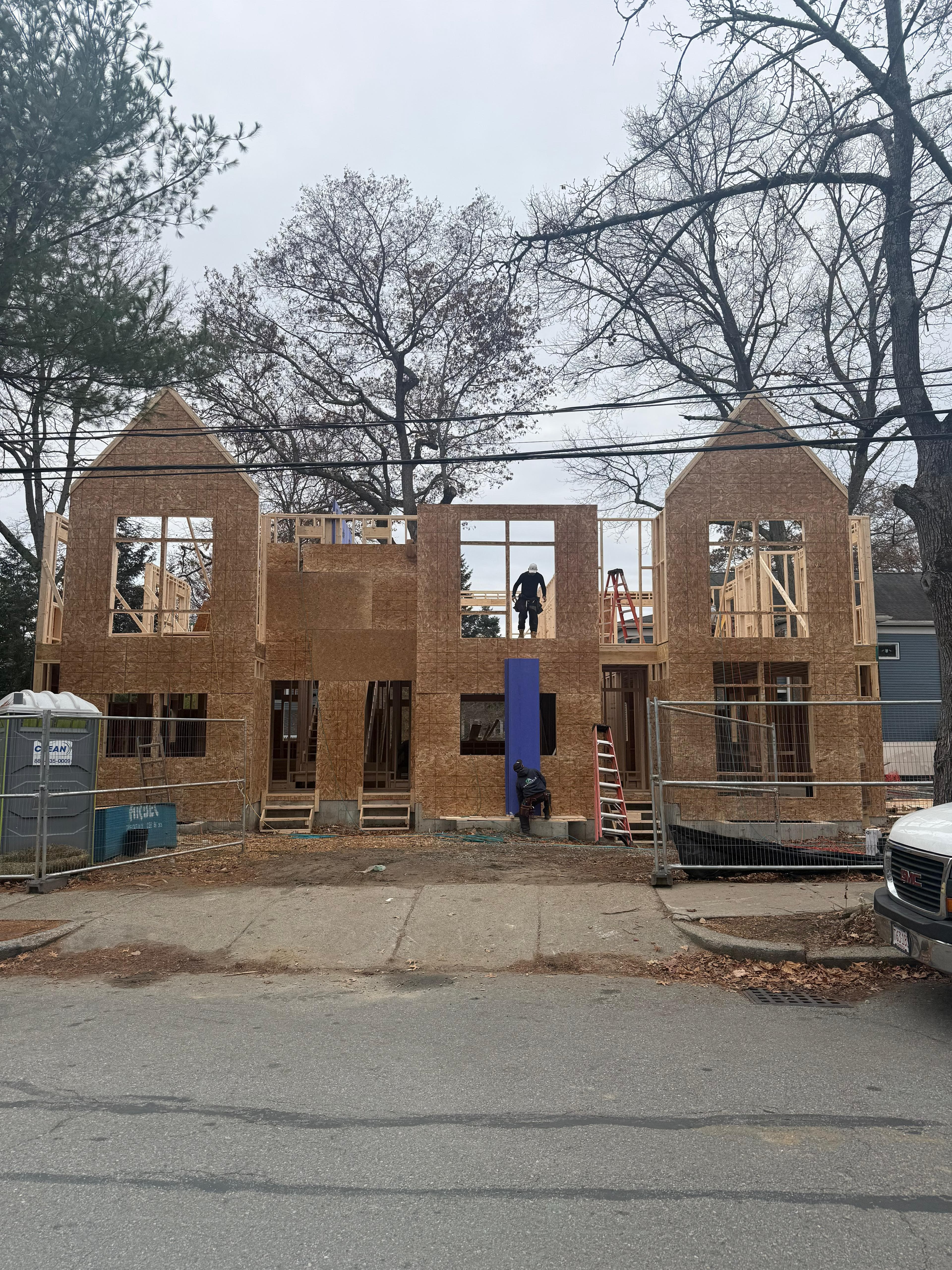
Open Concept Renovation: The Load-Bearing Wall Question
"Can we remove this wall?" It's the first question in 70% of our renovation consultations. The answer is almost always YES — but the method and cost depend entirely on what that wall is carrying.
How to Tell If a Wall Is Load-Bearing
Signs it's load-bearing:
Signs it's NOT load-bearing:
Important: NEVER rely on visual inspection alone. We always verify from the attic or basement, checking what loads transfer through the wall. Getting this wrong is catastrophic.
Cost of Removing a Load-Bearing Wall in Massachusetts
| Scenario | Cost Range | What's Involved | |----------|-----------|-----------------| | Short span (6-8 ft), single story above | $2,500 - $5,000 | LVL beam, 2 posts, patching | | Medium span (10-14 ft), single story | $4,000 - $8,000 | Engineered beam, steel posts, ceiling repair | | Long span (16-20 ft), single story | $6,000 - $12,000 | Steel beam, potentially steel posts, full ceiling restoration | | Any span with second story above | $8,000 - $18,000 | Temporary shoring, engineered beam, potentially foundation reinforcement |
The Process: How We Remove Load-Bearing Walls
Step 1: Engineering (1-2 weeks) A structural engineer calculates the loads and specifies the beam size. This is NOT optional — Massachusetts building departments require engineer-stamped plans for load-bearing wall removal. Engineering fee: $500 - $1,500.
Step 2: Permits (1-3 weeks) We submit the engineered plans to your local building department. Most MetroWest towns approve structural permits in 1-3 weeks.
Step 3: Temporary Support (Day 1) Before touching the wall, we install temporary shoring — adjustable posts and beams that carry the load while we work. This is the most critical safety step.
Step 4: Wall Removal (Day 1-2) We carefully remove the wall, relocating any electrical, plumbing, or HVAC that runs through it. This is where surprises happen — hidden wires, pipes, or ducts.
Step 5: Beam Installation (Day 2-3) The engineered beam slides into place. We secure it to posts that transfer the load down to the foundation. Connection hardware is installed per the engineer's specifications.
Step 6: Finishing (Day 3-5) Drywall, tape, texture, and paint to make it look like the wall was never there. This includes matching your existing ceiling texture.
Real Example: Kitchen Open Concept in Marlborough
Project: Remove 14-foot load-bearing wall between kitchen and dining room in a 1975 colonial.
Discoveries: Wall contained 3 electrical circuits, 1 HVAC duct, and a plumbing vent stack.
Solution: 14-foot LVL beam (two 1-3/4" x 11-7/8" LVLs laminated together), concealed in the ceiling joists. Electrical rerouted through attic. HVAC duct extended. Plumbing vent relocated to adjacent wall.
Cost: $9,800 including engineering, permits, structural work, electrical, HVAC, plumbing, and drywall finishing.
Timeline: 6 working days.
Result: Beautiful open kitchen-to-dining flow that the homeowner had wanted for 10 years.
Why Your Framing Contractor Matters Most
For open concept renovations, your contractor's framing expertise matters more than their design sense. A designer can show you a beautiful rendering, but if your contractor doesn't understand structural loads, beam specifications, and temporary shoring, the project is dangerous.
At RS Development Group, structural framing is our primary expertise. We've removed over 50 load-bearing walls across MetroWest with zero structural issues. Every project is engineered, permitted, and inspected.
Ready to Open Up Your Space?
Free consultation to assess your wall, discuss options, and provide a detailed quote.
Call (774) 512-3176
Serving Marlborough, Framingham, Natick, Sudbury, Worcester, Newton, Wellesley, Medford, and 60+ Massachusetts communities.